Key takeaways
- Most kitchens need at least one seam because slabs are only so big.
- Seams are best placed at sinks, cooktops or corners, away from the main view.
- Well-made seams are thin, level and color-matched.
- Jumbo slabs reduce seams but need a clear path and a strong crew.
Why seams happen
Slabs come in limited sizes, commonly around ten to twelve feet long, and many kitchens run longer than one slab. Corners also need seams, because stone cannot bend. Some stone is weak around cutouts, so a seam near the sink reduces the risk of cracking.
Seams are normal and a sign of careful planning, not a flaw.
Where seams go
A good layout puts seams where they are least noticeable and structurally sensible: at the middle of a sink, near a cooktop corner or on a long run where the pattern breaks naturally. The slab is laid out on paper or on the stone so veining and color match across the joint.
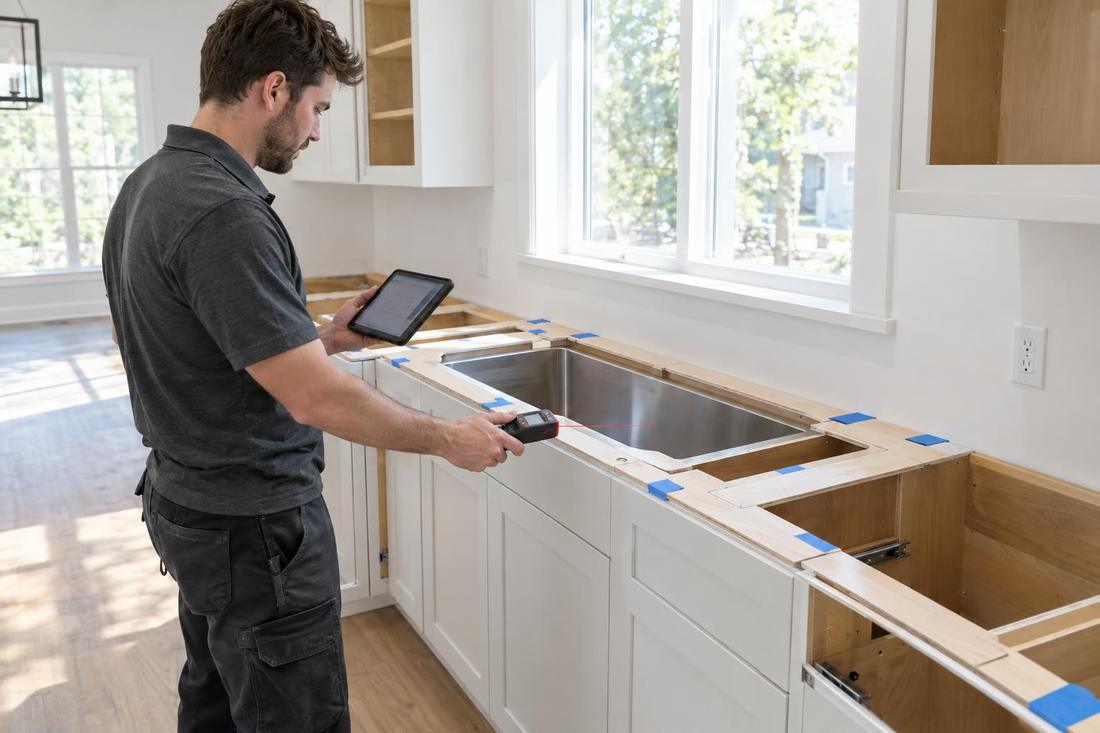
We mark the seams on the layout for your approval.
How seams are made
The two edges are cut straight, test-fitted, leveled and joined with color-matched adhesive, then pressed tight and cleaned. Good seams are thin and flat, with no ridge you can feel. Dark and solid colors show seams more than light and patterned ones.
Cabinet level matters, because an uneven base leaves uneven seams.
Large slabs
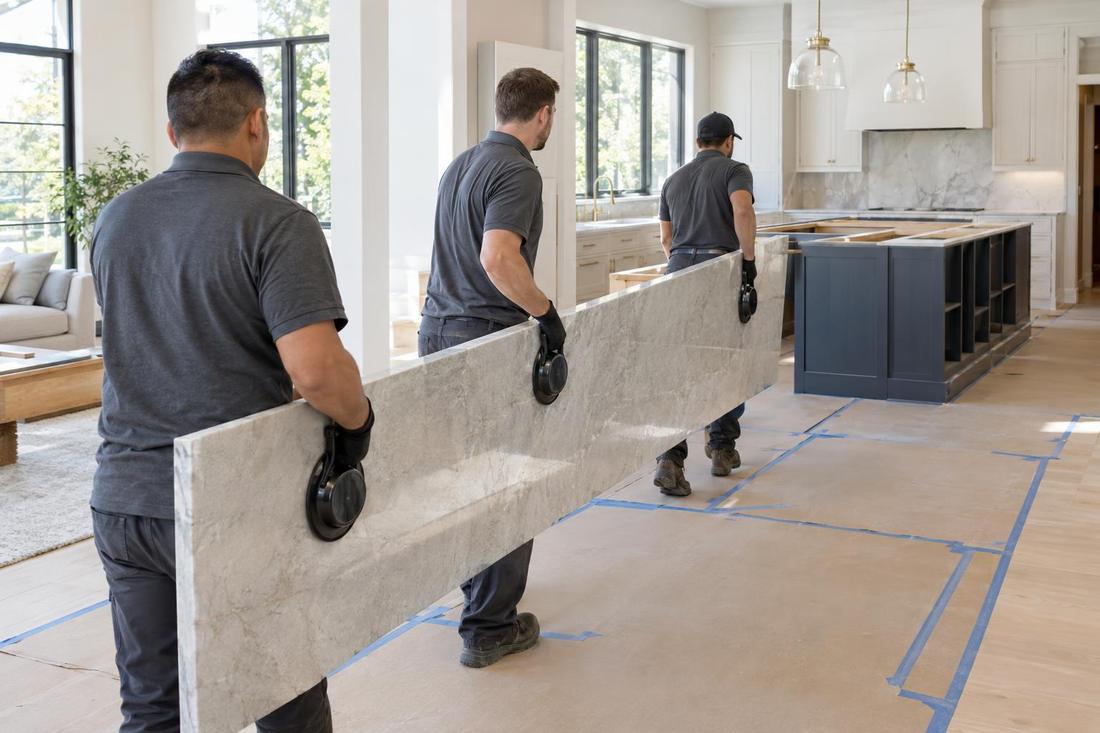
Jumbo slabs can cover long islands in one piece, but they weigh a lot, need a wide, clear path and strong cabinet support. Measure doors, stairs and turns before choosing one. Where the path is tight, a planned seam is better than a risky carry.
Ask your fabricator about slab sizes before you choose.
Official sources and further reading
These are independent organizations. Links open in a new tab.
Quick answers
Can a seam be invisible?
It can be very hard to see, especially in light or patterned stone, but it is rarely completely invisible.
How many seams will my kitchen have?
It depends on the layout and slab size. We plan it with you before the stone is cut.