Key takeaways
- The cabinets must be installed, level and secure before templating.
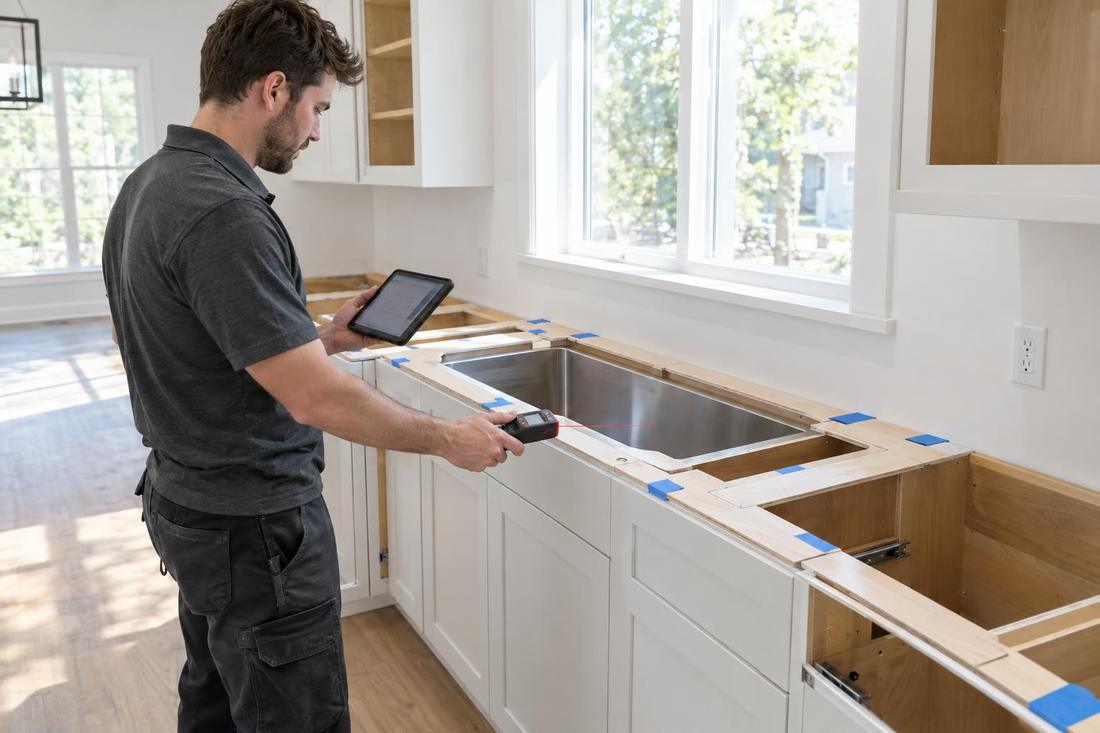
- The template records walls, corners, cutouts and seams, and the stone is cut to it.
- Fabrication takes time because stone is cut, shaped and polished in a shop.
- Installation day is when the stone is set, seamed, sealed and cleaned up.
Selection and planning
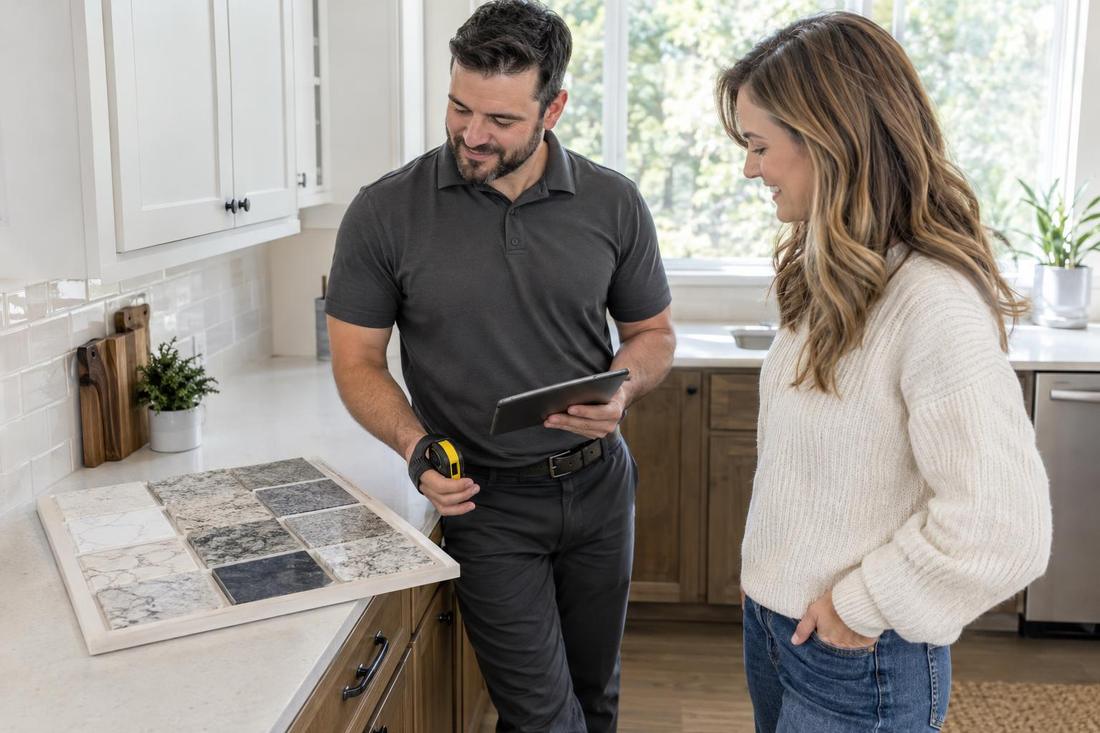
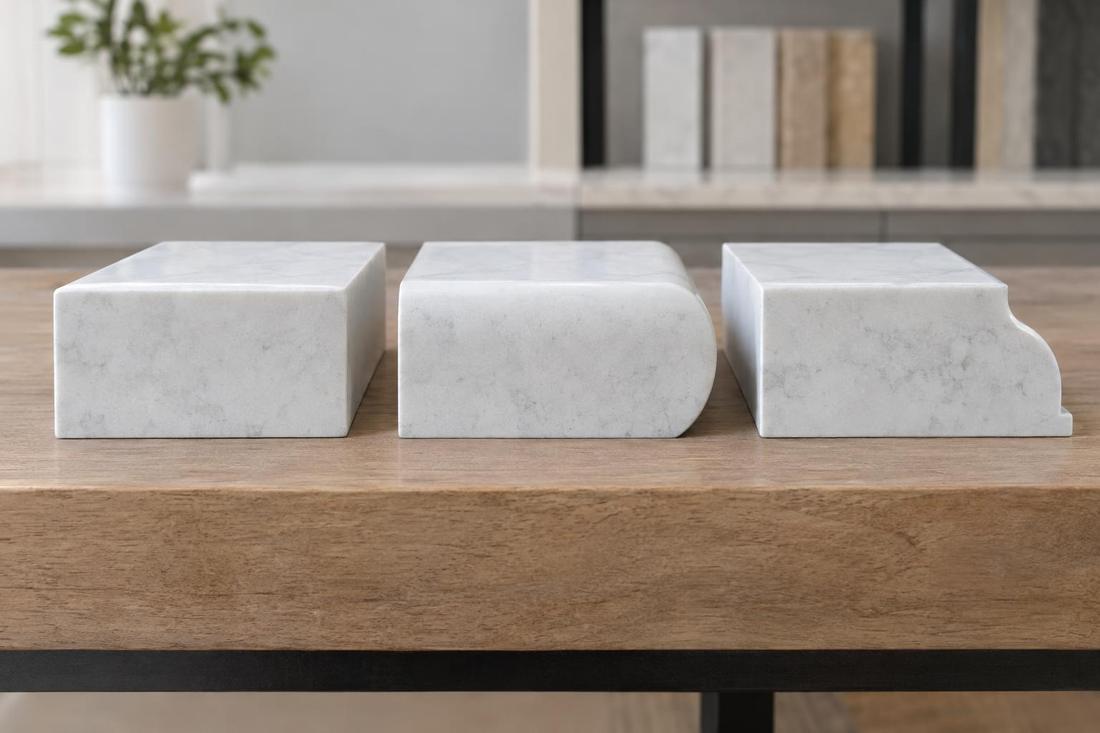
The process starts with choosing the material and slab and planning the layout: where the seams go, how the pattern runs, which edge you want and where the sink and cooktop will sit. Choose your sink and cooktop early, because the cutouts depend on them.
We mark the layout on the slab so you can approve it before cutting.
Templating
Once the cabinets are installed, the template captures the exact shape of your space, including wall angles and cutout positions. Digital templating records the measurements precisely, and the final plan is confirmed with you.
Changes after templating, like moving cabinets, can mean a new template.
Fabrication
In the shop, the slab is cut to the template, the edges are shaped and polished and the sink and cooktop openings are cut. Timing depends on the material, the complexity and the shop schedule, and we give you a window.
Stone is checked for flaws and fit before it leaves the shop.
Installation
On install day, the crew protects your floors, removes the old top if needed, checks the cabinets, test-fits and sets each piece, joins seams, caulks and cleans up. Plumbers and tile installers often follow to reconnect the sink and set the backsplash.
We walk you through the finished work and care steps.
Official sources and further reading
These are independent organizations. Links open in a new tab.
Quick answers
How long does the whole process take?
It depends on material availability, fabrication time and your schedule. We give you a window when we plan the project.
Can I change the layout after templating?
Small changes can be handled, but major changes may need a new template.