
Key takeaways
- Quartz is non-porous and does not need sealing.
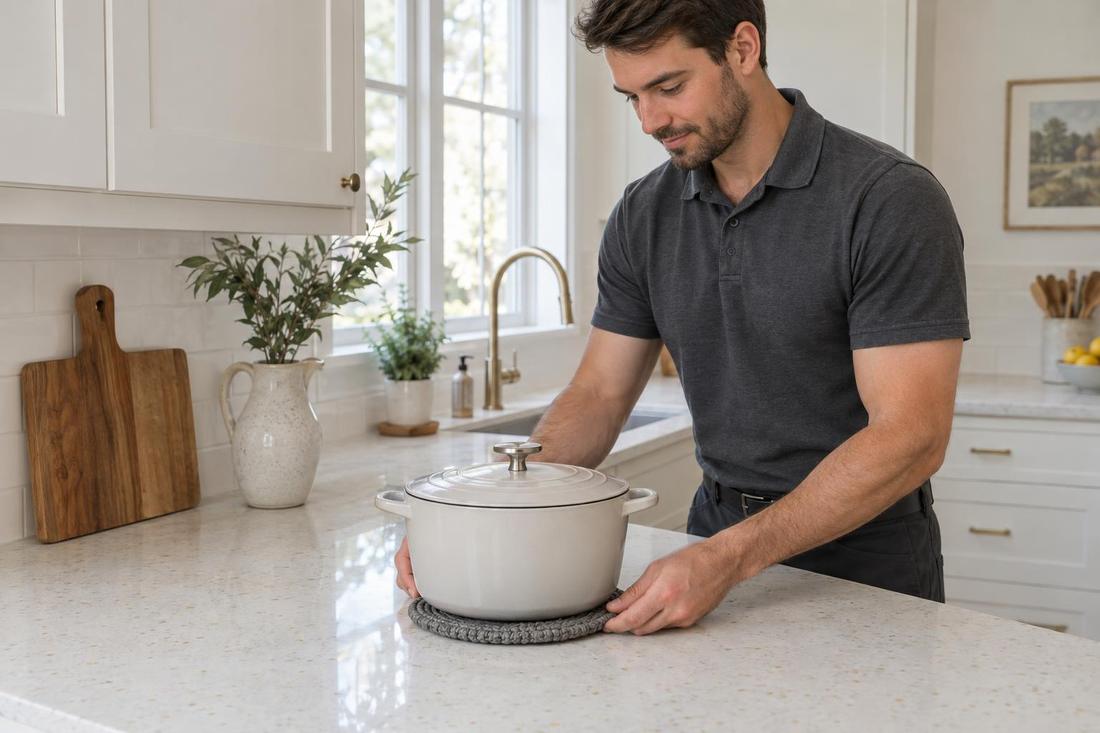
- Use trivets, because high heat can damage the resin.
- Avoid harsh chemicals and abrasive pads.
- Keep quartz out of strong direct sun outdoors.
Daily cleaning
Mild dish soap and warm water on a soft cloth is usually all quartz needs. For dried spots, a plastic scraper and a non-abrasive cleaner work well. Rinse and dry to avoid streaks.
Avoid scouring pads and strong solvents.
Heat
Quartz contains resin that can discolor or crack under very high heat, so always use trivets under hot pots, pans and baking sheets. Small appliances that produce heat, like slow cookers and air fryers, are best used on a trivet too.
Heat damage is not repairable in most cases.
Chemicals and stains
Quartz resists most household stains, but strong chemicals such as paint remover, oven cleaner and some drain cleaners can damage it. Rinse right away if they spill. Permanent markers and nail polish can sometimes be removed with isopropyl alcohol.
Check the manufacturer care guide for your brand.
Outdoors
Resin in quartz can fade or yellow with prolonged exposure to ultraviolet light, so it is generally not recommended for outdoor kitchens. For outdoor spaces, granite, quartzite or porcelain are better choices.
We can recommend outdoor-ready materials.
Official sources and further reading
These are independent organizations. Links open in a new tab.
Quick answers
Can I cut on quartz?
It resists scratches well, but a cutting board protects your knives and the surface.
Does quartz stain?
It resists staining because it is non-porous, but strong dyes and chemicals left for long periods can mark it.