Key takeaways
- Granite and quartzite are natural, hard and heat tolerant, and they need sealing.
- Quartz is engineered, non-porous and consistent, and it does not like very high heat.
- Marble is beautiful and soft, and it etches, so it suits owners who accept a patina.
- Match the material to how you cook, how you clean and how you feel about wear.
Granite
Granite is a hard natural stone with speckled or banded patterns and no two slabs alike. It tolerates heat well and resists scratches, though it is porous and benefits from sealing from time to time. It suits busy kitchens where people want natural stone without fuss.
Choosing the slab in person is the best way to know what you will get.
Quartz
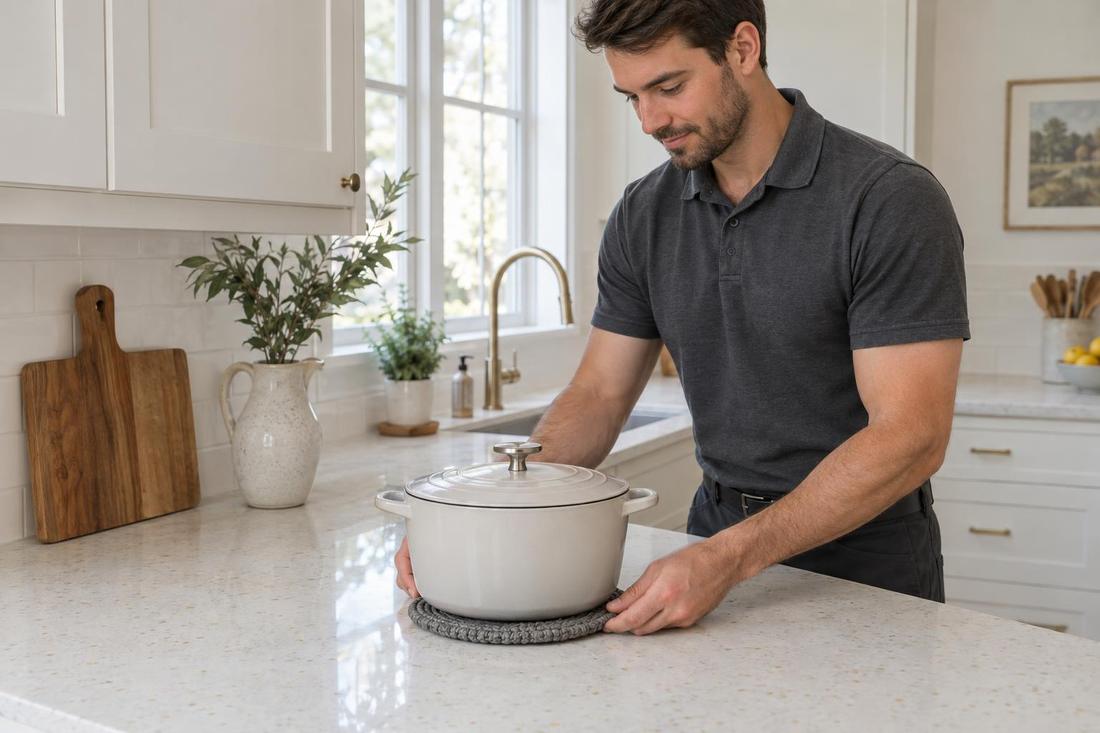
Quartz is engineered from ground natural quartz and resin, so it is non-porous, consistent and low-maintenance. It does not need sealing, and it comes in a wide range of looks. The resin means very hot pans can damage it, so trivets are a good habit.
It suits owners who want predictable color and easy care.
Marble and quartzite
Marble is a softer natural stone with elegant veining, and it etches and stains more easily. Quartzite is a harder natural stone that can look like marble while resisting etching better, though it varies and often needs sealing. Both are best chosen by looking at the actual slab.
Honed finishes hide wear better than polished ones.
Porcelain, solid surface and others
Porcelain and ultra-compact surfaces are very hard and heat tolerant. Solid surface is seamless and repairable but softer. Laminate is practical and economical. Wood and concrete are warm and custom but need regular care. The right choice depends on use, look and upkeep.
We can compare samples with you in your own light.
Official sources and further reading
These are independent organizations. Links open in a new tab.
Quick answers
Which material is the most durable?
Hard natural stones, quartz and porcelain all stand up well. The best one depends on whether you worry more about heat, stains or scratches.
Can I mix materials in one kitchen?
Yes. Many kitchens use one material on the island and another on the perimeter.