Key takeaways
- Clean with mild soap and warm water or a pH-neutral stone cleaner.
- Avoid vinegar, lemon, bleach and abrasive powders on natural stone.
- Wipe spills quickly, especially oil, wine, coffee and citrus.
- Use trivets and cutting boards to protect the surface.
Daily cleaning
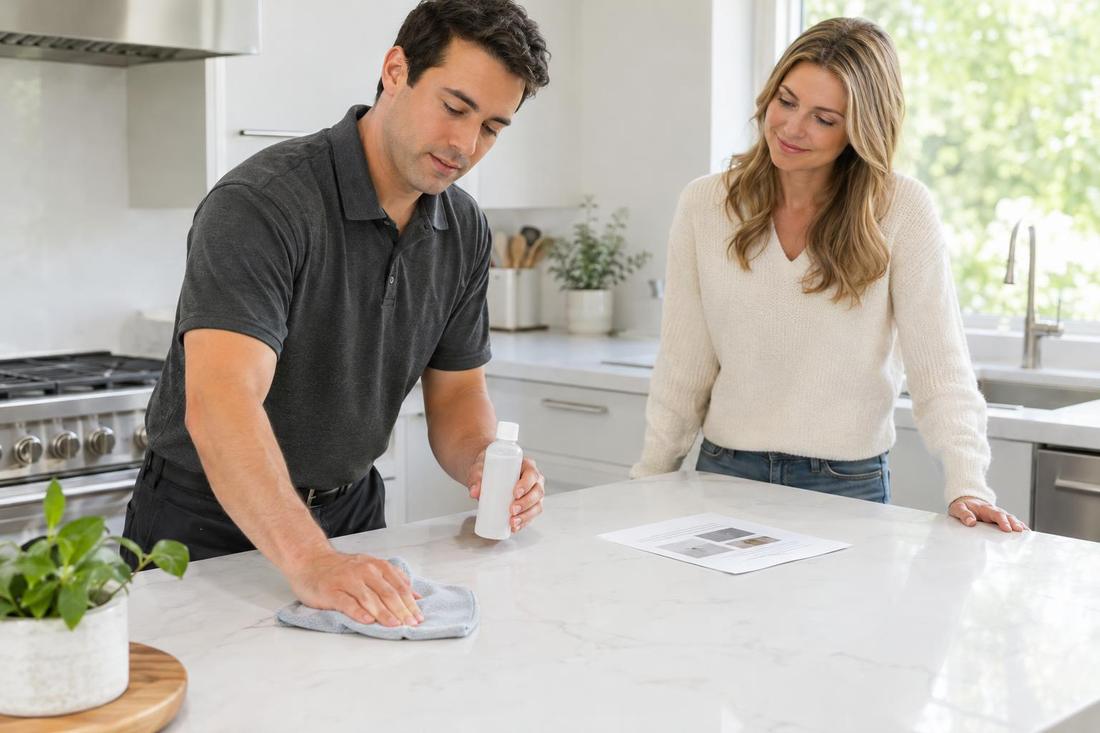
Wipe the surface with a soft cloth and mild dish soap in warm water, then dry it to avoid streaks. A pH-neutral stone cleaner is a good alternative. Avoid products with acid or strong chemicals, which can dull or etch the surface.
Use a clean cloth, not a gritty sponge.
Spills and stains
Blot spills right away rather than wiping, which can spread them. Oil, wine, coffee and citrus can mark unsealed stone, and acids can etch marble. If a stain sets, a poultice made for stone can draw it out.
Do not scrub hard, which can dull the finish.
Heat and impact
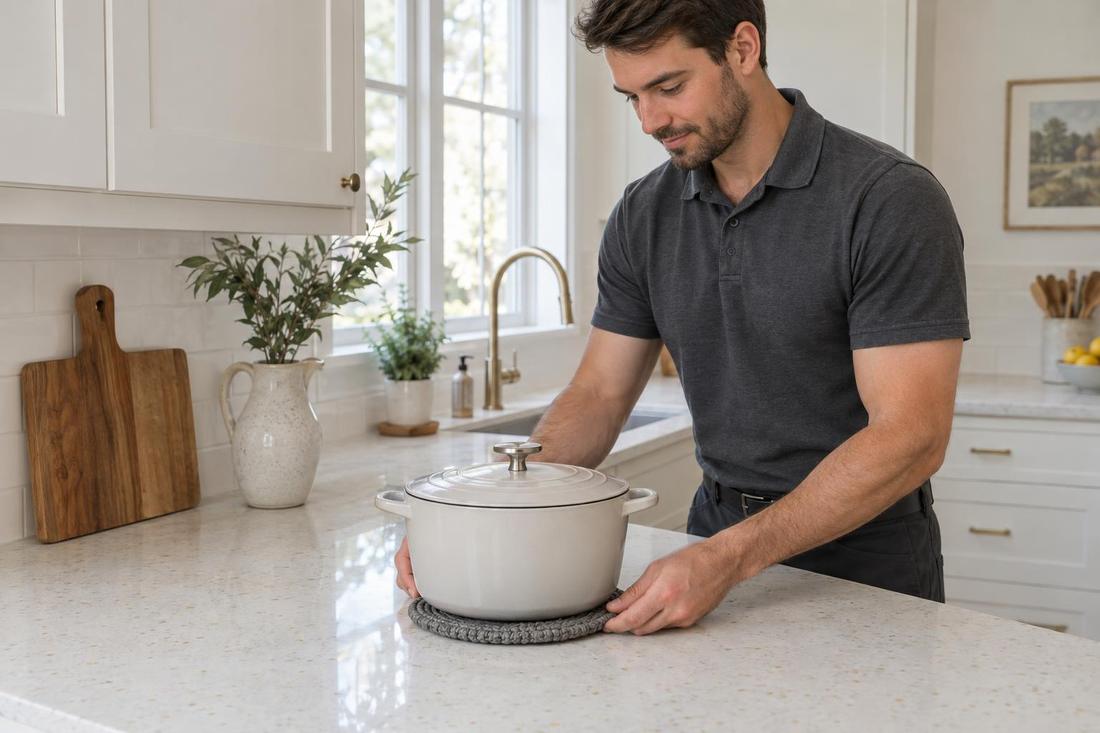
Granite and quartzite handle heat well, but any stone can crack from sudden extreme changes, so use trivets. Avoid dropping heavy items on edges and corners, where chips tend to happen. Do not sit or stand on overhangs.
Use cutting boards to protect knives and the surface.
Sealing
Many natural stones benefit from a penetrating sealer. A simple water test shows when it is time: if drops darken the stone after several minutes, the sealer is wearing thin. Quartz does not need sealing.
We can test your stone and reseal it for you.
Official sources and further reading
These are independent organizations. Links open in a new tab.
Quick answers
Can I use a glass cleaner on stone?
Many glass cleaners contain ammonia or acids that can dull stone. Use a stone-safe cleaner instead.
How do I know if my stone is sealed?
Put a few drops of water on the surface. If they bead, the sealer is working. If they soak in and darken the stone, it needs sealing.