Key takeaways
- The edge sets the style, from clean and modern to soft and traditional.
- Rounded edges chip less and are friendlier to children and elbows.
- Mitered or built-up edges make a top look thicker and more substantial.
- Decorative edges collect more dust and need more careful cleaning.
Common profiles
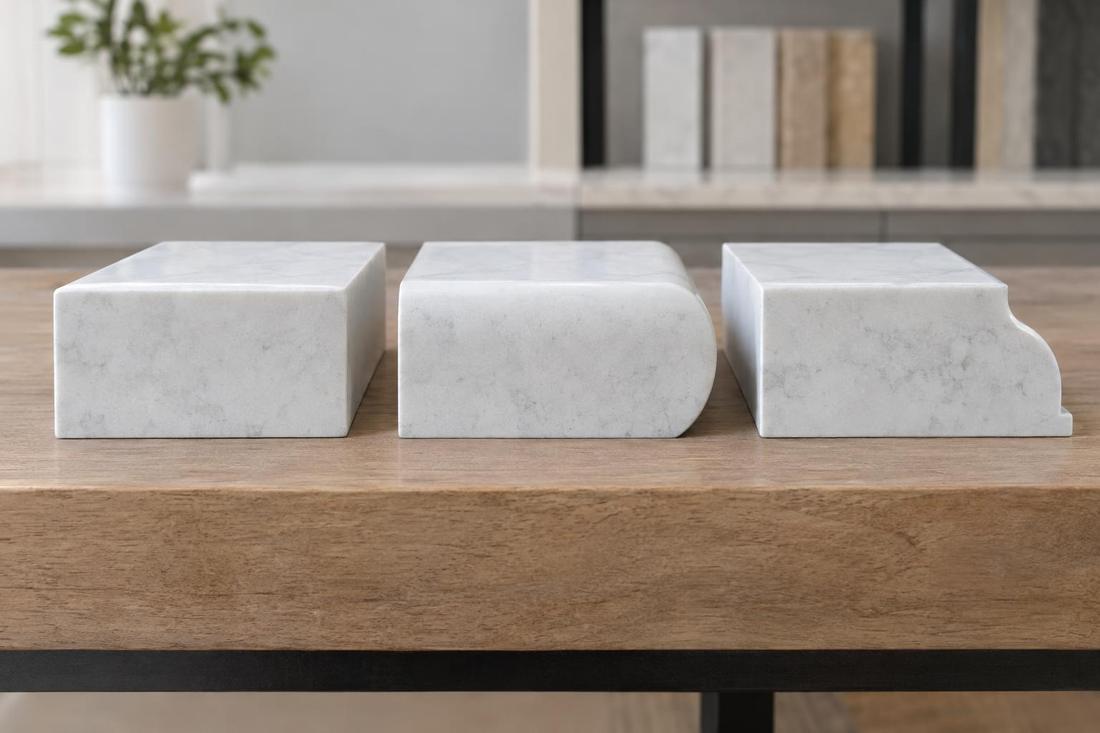
An eased edge has a slight rounding on the top corner and is clean and modern. A bullnose is fully rounded and soft. A bevel has an angled cut that catches light. An ogee is a decorative S-shaped curve for traditional kitchens. Each is shaped and polished to match the face of the stone.
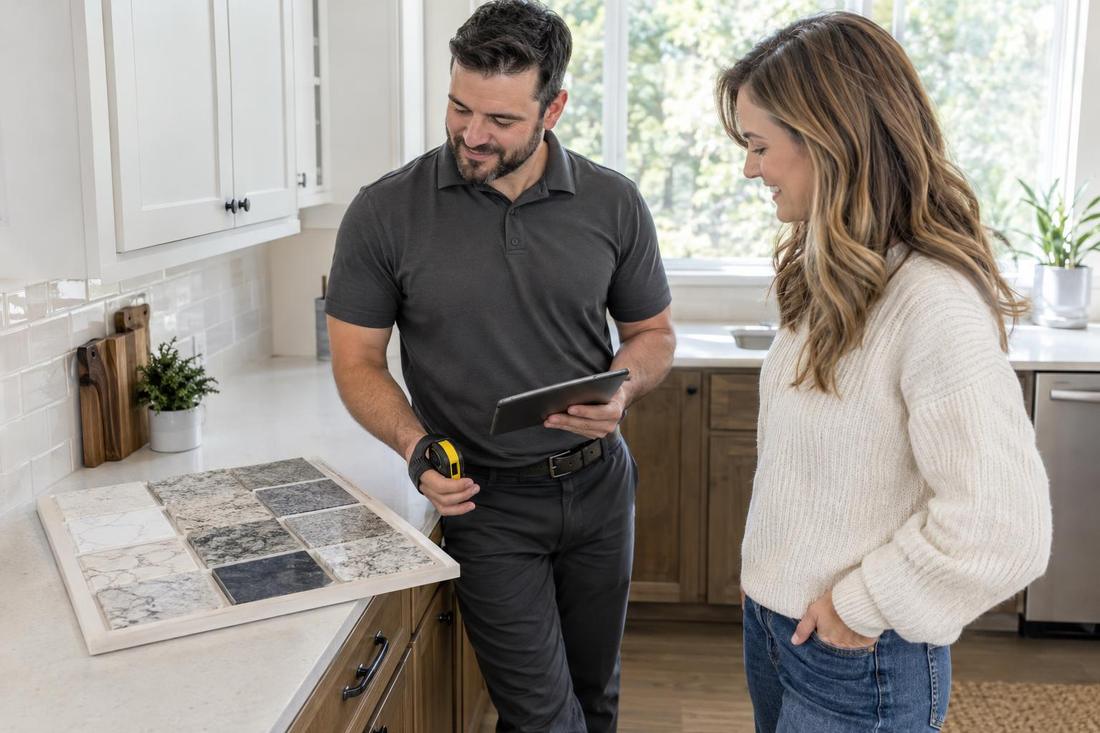
Look at samples to see and feel the difference.
Thickness
Stone slabs are commonly two or three centimeters thick, and thicker looks are made by building up the edge or mitering a strip underneath. A mitered edge looks substantial and continuous, but it takes more material and careful fabrication.
Thicker edges also change how the top meets the backsplash and cabinets.
Practical considerations
Sharp edges are more likely to chip, especially on hard, brittle materials. Rounded edges are safer around children and wear better. Decorative edges look beautiful but can be harder to clean, and some edges suit a given material better than others.
We advise based on your household and your stone.
Matching the room
The edge should suit the style of the room: a simple eased edge for modern kitchens, an ogee for traditional ones and a mitered edge for statement islands. Using the same edge throughout is a safe choice, and a special edge on the island can be a feature.
Ask to see edges on the actual material.
Official sources and further reading
These are independent organizations. Links open in a new tab.
Quick answers
Which edge is the most popular?
Eased and slightly rounded edges are common because they look clean and are easy to live with.
Does the edge change the work involved?
Decorative and built-up edges take more fabrication time and material. We explain what each option involves.